(479) 304-0400
Board fence running along an open, grazed pasture with bare trees in morning mist

Land management and pasture upkeep in Arkansas

Mark's Arkansas Land Clearing Service keeps cleared pasture, fence lines, and hunting land from going back to brush, statewide from three Google listings, rated 5.0 on Google.

A short recording answers first. Press 1 and you're put through.

Ask any land management crew these six questions

We read the 1-to-3-star Google reviews of 88 Arkansas clearing and tree companies, and 172 of them were about the work itself. Landowners on farm and homestead forums added the fear Google reviews miss: cleared ground that grows right back. Each answer below is a promise the person running your job carries out.

  1. 01

    Will the brush just grow back?

    Forum threads, outside the 172 reviews: mulched ground that grew back thicker

    Before we quote, we tell you what the ground will look like the day we leave and what it will need afterwards to keep the brush from coming back.

  2. 02

    Will the pasture get finished?

    16 of 172 reviews: the crew left the work half done

    If we have to leave before the job is finished, you get the return date before the crew leaves.

  3. 03

    How will the stumps and mulch be left?

    11 of 172 reviews: stumps left that the owner expected gone

    Your quote says how the stumps will be left (ground level, below grade, or removed) and about how thick the mulch will be. We check it with you at the walkthrough.

  4. 04

    Will the price change once you start?

    12 of 172 reviews: the price changed with nothing in writing

    You get a written quote before any work. It lists every charge, travel included. The price changes only if you approve the change in writing first.

  5. 05

    Who calls me back?

    61 of 172 reviews: the crew stopped answering

    Every call or text gets a call back the same working day, from the person running your job.

  6. 06

    What if the fence gets hit?

    21 of 172 reviews: damage the crew wouldn't own

    If we damage anything (a fence, a gate, a line, a culvert), we tell you before we leave that day, and the fix goes in writing.

Quick answers about keeping cleared land clear

What Arkansas landowners ask Google about pasture, cedar, and ground that's been cleared before. Each answer starts with the answer.

What to do with land after forestry mulching?

Keep the regrowth cut back before woody sprouts get big. Arkansas Extension's pasture weed guide tells owners to plan for maintenance so they don't lose what the first treatment gained. Before we quote, Mark's Arkansas Land Clearing Service tells you what your ground will need afterwards to keep the brush from coming back.

Will a cedar tree grow back after being cut down?

No, not when it's cut low enough. Arkansas Extension says a cedar cut off near the soil line, below any green needles, won't sprout back and will die. Your written quote from Mark's Arkansas Land Clearing Service says how the stumps will be left: ground level, below grade, or removed.

Why do farmers cut down cedar trees?

Because cedar takes over grazing ground. Arkansas Extension calls eastern red cedar a pioneer species that moves into disturbed or overgrazed pasture, and a problem in fence rows. Mark's Arkansas Land Clearing Service clears cedar out of pasture and fence lines statewide, working from three Google listings.

What is bush hogging used for?

Keeping open ground open. Arkansas Extension describes bush hogging as mowing with a large rotary mower behind a tractor, and notes that a mulching machine is sometimes used on large shrubs and small trees. Before we quote, Mark's Arkansas Land Clearing Service tells you what the ground will look like the day we leave.

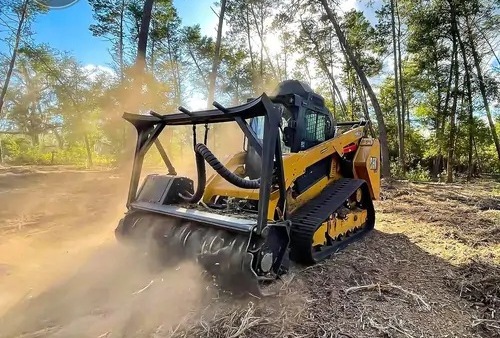
Tracked skid steer with a forestry mulcher head grinding brush among tall pines, dust in the air
Frame 02MulcherArkansas

Over 20 years clearing Arkansas land

Mark's Arkansas Land Clearing Service is fully licensed and insured. We carry liability insurance and send the certificate on request.

We have the equipment for any land clearing or earth-moving job, so the crew that opened your pasture can come back with the right machine when the regrowth starts. The estimate is free, and our lines are open 24/7.

We work statewide from three Google listings: Hindsville, Greenbrier, and Hot Springs. The crew comes to your land.

How the job goes, from your first call to the walkthrough

Six steps, in order, and what you see at each one.

  1. 01

    Your phone rings back

    Every call or text gets a call back the same working day, from the person running your job. If we can't take your job, we say so on the first call.

  2. 02

    We walk the regrowth with you

    You show us the pasture edges, fence rows, and trails that are closing in. Before we quote, we tell you what the ground will look like the day we leave.

  3. 03

    A quote in writing

    You get a written quote before any work. It lists every charge, travel included. Your quote comes with a start week.

  4. 04

    Two calls, then flags

    We call the day before, and again when the crew pulls in. Before the machine starts, we walk and flag the boundaries and anything you want saved.

  5. 05

    The regrowth comes out

    If the ground is too wet to work without rutting, we tell you and reschedule. Any ruts we make are smoothed before we leave.

  6. 06

    Walkthrough, then payment

    We walk the site with you before we call the job done. Final payment is due after the walkthrough. Every payment gets a receipt.

Pasture upkeep, fence lines, and cedar control

Land management is the work after the first clearing. The University of Arkansas Extension's pasture weed guide tells landowners to plan for maintenance so they don't lose what the first treatment gained. These are the five kinds of Arkansas ground we keep open.

  • Open grass pasture running up to a dense line of pine and hardwood trees

    Pasture edges closing in

    Sprouts and saplings cut back where the pasture meets the woods, before the tree line moves out into the grass. Pasture the trees already took is a land clearing job.

  • Wire fence line and metal gate along a green field, a farm track on the other side

    Fence lines and gates

    Brush and young cedar cut out of fence rows so you can see the wire and swing the gate. Arkansas Extension names fence rows as one of the places cedar becomes a problem.

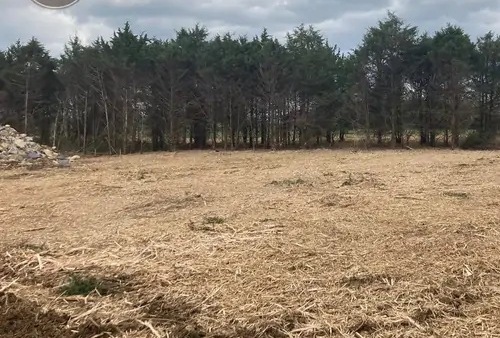
  • Open field under fresh wood mulch after clearing, a line of cedars behind it

    Cedar coming back

    Young cedar taken out of ground that was cleared before. Cut below its lowest green needles, a cedar stump won't sprout back, Arkansas Extension says.

  • Whitetail buck looking back across a green food plot below a brushy tree line

    Food plots and shooting lanes

    Openings on hunting land kept from closing back in, with the cover you hunt beside left standing.

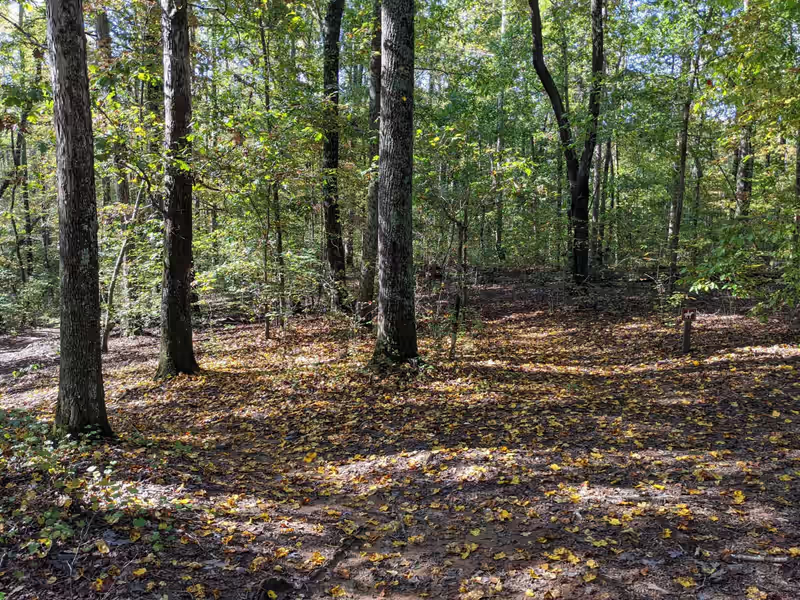
  • Open hardwood woods with a leaf-covered trail and a cleared understory

    Trails and open woods

    Trails and woods you opened up, kept walkable and drivable as the understory fills back in. Thick underbrush on its own is brush removal.

Land management, forestry mulching, or brush removal

All three cut brush. Forestry mulching and brush removal open ground up, and land management keeps it open after that.

Land management

Takes off
Regrowth: sprouts, saplings, and young cedar coming back into cleared ground
Leaves behind
The pasture, fence line, or trail you already opened, kept open
Stumps
Ground level, below grade, or removed, written on your quote
Fits
Pasture, fence rows, and trails cleared before and now growing back

Forestry mulching

Takes off
Brush and small trees, chewed into mulch where they stand
Leaves behind
A mulch layer over the soil, with nothing hauled away
Stumps
Often left at ground level, with the roots still in the soil
Fits
Opening up woods and brushy ground the first time
Forestry mulching

Brush removal

Takes off
Brush, underbrush, cedar thickets, and fence-row growth
Leaves behind
Ground clear of brush, the cut material mulched, piled, or hauled away as your quote says
Stumps
Ground level, below grade, or removed, written on your quote
Fits
One overgrown thicket, fence row, or patch of woods
Brush removal

What kept-up land looks like the day we leave

Land management leaves ground you already cleared back the way you wanted it. Three things decide whether it stays that way, and we go over each one before we quote.

Drawn cross-section of kept-up pasture: an open fence line, a cedar cut off below its green needles, and old hardwood roots with their sprouts cut back 1 2 3
  1. 1Fence line openBrush and young cedar cut out of the fence row, with the wire walked and flagged with you before the machine starts.
  2. 2Cedar cut lowCut off below its lowest green needles, a cedar stump won't sprout back, Arkansas Extension says.
  3. 3Hardwood sproutsMany Ozark hardwoods sprout from the roots, Arkansas Extension notes. Those sprouts are what comes back after a clearing.
Before we quote

Before we quote, we tell you what the ground will look like the day we leave and what it will need afterwards to keep the brush from coming back.

If we have to leave

If we have to leave before the job is finished, you get the return date before the crew leaves.

5.0on Google

What landowners say about the work

Every review on our three Google listings gives five stars.

We had hired them to do some forestry mulching around Conway. They did a superb job and the crew completed the job on time. Thank you!

Rashel Reece Liu, Google review
  • A great job they did on my farm.

    Erin Mitchell
  • Mark and his team are outstanding! They were quick to get back with us, and did an excellent job. We had them clear some land near Fayetteville by mulching. We are so happy with the job!

    Noela May Tiansay
  • I will recommend it to everyone and my family

    Mariz Morada

Arkansas rules that can touch land upkeep

On the first visit we tell you which Arkansas rules may touch your job (burn bans, the 1-acre stormwater permit, septic permits) and who handles each.

  1. Burn bans

    County judges declare burn bans county by county, and a ban can start or lift any day. The Arkansas Department of Agriculture's Forestry Division shows every county on its fire danger and burn ban map. Owners who plan an open fire for brush piles from their own upkeep check that map first.Source: Arkansas Department of Agriculture, Forestry Division, Fire Danger and Burn Ban Map
  2. Wetlands

    The Little Rock District of the Corps of Engineers says clearing wetlands with mechanized equipment requires a permit under Section 404 of the Clean Water Act. Low, wet bottomland is the place to ask before a machine goes in.Source: U.S. Army Corps of Engineers, Little Rock District, Regulatory Division
  3. Stormwater

    The Arkansas Division of Environmental Quality's construction stormwater permit, ARR150000, covers construction that disturbs 1 acre or more, so it comes in when cleared ground is being readied to build on. Sites of 1 to under 5 acres are covered automatically but must post a notice and keep a stormwater plan on site. At 5 acres or more, a Notice of Intent goes in at least 10 business days before work starts.Source: Arkansas DEQ, ARR150000 fact sheet, permit effective November 1, 2026

Land management near you, region by region

Each region page lists its towns and the line nearest you. All three of our lines reach the same crew.

Northwest Arkansas

Benton, Washington, Madison, and Carroll counties

Central Arkansas

Pulaski, Faulkner, Saline, Lonoke, Perry, Conway, and Grant counties

Arkansas River Valley

Crawford, Sebastian, Franklin, Logan, Johnson, Scott, Pope, and Yell counties

Ozarks and North Central

Boone, Marion, Newton, Searcy, Baxter, Stone, Izard, Fulton, Sharp, Van Buren, and Cleburne counties

Hot Springs and the Ouachitas

Garland, Montgomery, Hot Spring, Clark, Pike, and Polk counties

Northeast Arkansas

Randolph, Lawrence, Clay, Greene, Craighead, Mississippi, and Poinsett counties

White River Valley

Independence, Jackson, White, and Woodruff counties

Arkansas Delta

Crittenden, Cross, St. Francis, Lee, Phillips, Monroe, Prairie, and Arkansas counties

Southwest Arkansas

Miller, Hempstead, Little River, Sevier, Howard, Lafayette, and Nevada counties

South Arkansas

Union, Columbia, Ouachita, Calhoun, Dallas, Bradley, and Cleveland counties

Southeast Arkansas

Jefferson, Lincoln, Drew, Ashley, Chicot, and Desha counties

Towns we serve, A to Z

Every Arkansas town with its own page, and the line nearest each one

More land management questions

What landowners ask once the first clearing is done and the ground starts to green back up.

Mulching, clearing, or brush hogging: the guide
Will grass grow after forestry mulching?

Yes, though a thick mulch layer slows it. Arkansas Extension's wildlife guide says cutting shrubs back lets grasses grow better, while the thatch a mulching machine leaves limits how much of the seed in the soil sprouts. Mark's Arkansas Land Clearing Service puts about how thick the mulch will be on your quote.

Will the stumps sprout back after mulching?

Some can. Arkansas Extension notes that many Ozark hardwoods sprout from the roots, while eastern red cedar does not. Before we quote, Mark's Arkansas Land Clearing Service tells you what the ground will look like the day we leave and what it will need afterwards to keep the brush from coming back.

Can you forestry mulch in the rain?

Sometimes, but not on ground soft enough to rut. If the ground is too wet to work without rutting, Mark's Arkansas Land Clearing Service tells you and reschedules. Any ruts we make are smoothed before we leave.

Do I need a permit to clear my own land?

It depends on where the ground is and what it's for. The Corps of Engineers requires a permit to clear wetlands with mechanized equipment, and Arkansas's ARR150000 stormwater permit covers construction that disturbs 1 acre or more. Mark's Arkansas Land Clearing Service names the rules that may touch your job on the first visit.

Tell us about the ground that's growing back

(479) 304-0400
Call or text. The person running your job calls back the same working day.

A short recording answers first. Press 1 and you're put through.

Call (479) 304-0400