(479) 304-0400
Yellow crawler dozer parked on freshly graded dirt, a pushed-up dirt pile and leafy trees behind it

Land grading and land leveling in Arkansas

Mark's Arkansas Land Clearing Service grades house pads, yards, fields, and road beds statewide from three Google listings, rated 5.0 on Google.

A short recording answers first. Press 1 and you're put through.

Ask any grading company these six questions

We read the 1-to-3-star Google reviews of 88 Arkansas clearing and tree companies, and 172 of them were about the work itself. These six questions cover what goes wrong on a grading job, and each answer is a promise the person running your job carries out.

  1. 01

    What if the ground is too wet to grade?

    9 of 172 reviews: ruts and a torn-up yard after the machines

    If the ground is too wet to work without rutting, we tell you and reschedule. Any ruts we make are smoothed before we leave.

  2. 02

    Where will the rain run when you're done?

    2 of 172 reviews: the drainage was worse after the work

    Before we quote, we tell you what the ground will look like the day we leave. We walk the site with you before we call the job done.

  3. 03

    Will the grade match what we agreed?

    17 of 172 reviews: work different from what was agreed

    Before the machine starts, we walk and flag the boundaries and anything you want saved, or send you photos of them.

  4. 04

    Will the price change once the dozer is here?

    12 of 172 reviews: the price changed with nothing in writing

    You get a written quote before any work. It lists every charge, travel included. The price changes only if you approve the change in writing first.

  5. 05

    What happens when it rains on the start date?

    15 of 172 reviews: no firm date, only "next week"

    Your quote comes with a start week. If the weather moves it, we call you.

  6. 06

    Who answers when I call?

    61 of 172 reviews: the crew stopped answering

    Every call or text gets a call back the same working day, from the person running your job.

Quick answers about land grading

What Arkansas landowners ask Google before they hire someone to grade a lot or level a yard. Each answer starts with the answer.

What does grading ground mean?

It means shaping the soil to the level and slope a job needs. Rough grade sets the overall shape by cutting high spots and filling low ones, and finish grade smooths the top. Mark's Arkansas Land Clearing Service does both, and before we quote, we tell you what the ground will look like the day we leave.

Is land clearing and grading the same thing?

No. Land clearing takes the trees, brush, and stumps off, and grading shapes the soil left underneath so it sits level and drains. Mark's Arkansas Land Clearing Service does both, so a wooded lot can go from standing timber to a graded pad without hiring a second company.

Do I need a permit to regrade my yard?

It depends on how much ground and where. Arkansas's construction stormwater permit, ARR150000, covers work that disturbs 1 acre or more, and grading or filling in a mapped flood hazard area needs a floodplain development permit first. On the first visit, Mark's Arkansas Land Clearing Service tells you which rules may touch your job and who handles each.

What is involved in grading a yard?

A walk of the yard, flags on what stays, cutting high spots and filling low ones so rain runs away from the house, then a smooth finish grade. Mark's Arkansas Land Clearing Service calls the day before and again when the crew pulls in, and walks the yard with you before calling the job done.

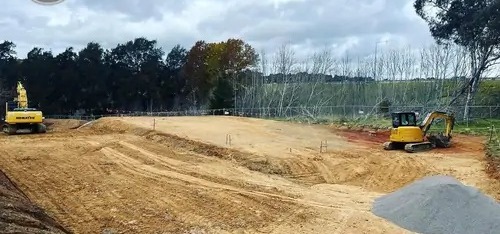
Graded building pad with a gravel pile and two excavators at the tree line
Frame 02Graded padArkansas

Over 20 years of land clearing and earth moving

Mark's Arkansas Land Clearing Service is fully licensed and insured. We carry liability insurance and send the certificate on request.

We have the equipment for any land clearing or earth-moving job, so clearing a lot, grading the pad, and putting in the gravel drive can stay with one crew. The estimate is free, and our lines are open 24/7.

We work statewide from three Google listings: Hindsville, Greenbrier, and Hot Springs. The crew comes to your land.

How a grading job goes, from your first call to the walkthrough

Six steps, in order, and what you see at each one.

  1. 01

    A call back the same day

    Every call or text gets a call back the same working day, from the person running your job. If we can't take your job, we say so on the first call.

  2. 02

    We walk the ground with you

    You show us the low spots, the wet spots, and where the pad or drive should go. Before we quote, we tell you what the ground will look like the day we leave.

  3. 03

    A written quote and a start week

    You get a written quote before any work. It lists every charge, travel included. Your quote comes with a start week.

  4. 04

    Two calls, then flags

    We call the day before, and again when the crew pulls in. Before the machine starts, we walk and flag the boundaries and anything you want saved.

  5. 05

    Rough grade, then finish grade

    High spots are cut, low spots are filled, and the top is smoothed. If the ground is too wet to work without rutting, we tell you and reschedule. Any ruts we make are smoothed before we leave.

  6. 06

    Walkthrough, then payment

    We walk the site with you before we call the job done. Final payment is due after the walkthrough. Every payment gets a receipt.

Lot grading, pads, yards, fields, and road beds

Some call it lot grading, some call it land leveling or smoothing. These are the five kinds of Arkansas ground we grade.

  • Two crawler dozers leveling sandy ground, seen from above, blade marks in rows behind them

    House pads and shop pads

    The ground for a house, a shop, or a barn, cut and filled to a flat pad. Gravel, the driveway, and the rest of the build ground are site prep and dirt work.

  • Track skid steer pushing a bucket of red clay through cleared brush in the woods

    Yards that hold water

    Yard grading that slopes the soil away from the house so rain runs off. When a yard needs pipe or a French drain too, see drainage solutions.

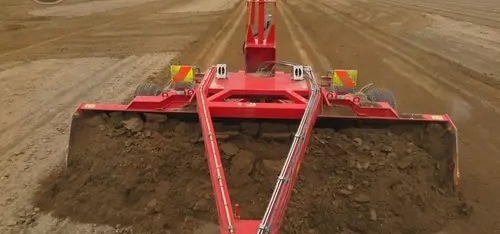
  • Red box blade pulling a load of soil across a bare field to level it

    Fields and pasture

    Land leveling for bumpy fields, washed-out spots, and old ruts, so a mower or a hay crew can cross them.

  • Yellow motor grader smoothing a rural dirt road lined with brush

    Driveways and farm roads

    The dirt bed of a drive or a farm road smoothed out before the gravel goes down.

  • Old crawler dozer pushing dirt on a lot being cleared of brush and small trees

    Ground just cleared

    A rough grade after land clearing: stump holes filled and the ground evened out so the next job can start.

Grading, site prep, or land clearing

All three get land ready to use, and each does a different part of the work. Here is what each one works on and what it leaves behind.

Grading and land leveling

Works on
The soil itself: high spots, low spots, ruts, and slope
Leaves behind
Smooth ground at a rough or finish grade, sloped so rain runs off
Comes
After the land is cleared, before gravel or a building
Fits
A house pad, a yard that holds water, or a bumpy field

Site prep and dirt work

Works on
What a build needs in the ground: pads, gravel roads, driveways, and erosion control
Leaves behind
A site ready to build on, with the drive and the road in
Comes
After clearing, with grading as one part of it
Fits
A new home site, a shop, or a farm road
Site prep and dirt work

Land clearing

Works on
Trees, brush, and stumps
Leaves behind
Open ground. Cut material is mulched in place, piled, or hauled away, as your quote says.
Comes
First, before any grading
Fits
Wooded or overgrown land you want to use
Land clearing

What graded ground looks like the day we leave

Grading leaves smooth ground that sheds rain and holds a pad, a drive, or a mower. Three things decide how it looks, and we walk each one with you at the end.

Drawn cross-section of graded ground: the old bumpy surface shown dashed, a flat pad with flags at its corners, filled low spots, and ground sloping away from the pad so rain runs off 1 2 3
  1. 1The padFlat ground for a house, a shop, or a barn, its corners walked and flagged with you before the machine starts.
  2. 2Cut and fillHigh spots cut down and low spots filled, so the bumps and dips of the old ground are gone.
  3. 3Finish gradeA smooth top that falls away from the pad so rain runs off, with any ruts we made smoothed before we leave.
Before we quote

Before we quote, we tell you what the ground will look like the day we leave and what it will need afterwards.

If we have to leave

If we have to leave before the job is finished, you get the return date before the crew leaves.

5.0on Google

What landowners say about the crew

Every review on our three Google listings is five stars.

Mark and his team are outstanding! They were quick to get back with us, and did an excellent job.

Noela May Tiansay, Google review
  • A great job they did on my farm.

    Erin Mitchell
  • They did a superb job and the crew completed the job on time. Thank you!

    Rashel Reece Liu
  • I will recommend it to everyone and my family

    Mariz Morada

Arkansas rules that can touch a grading job

On the first visit we tell you which Arkansas rules may touch your job (burn bans, the 1-acre stormwater permit, septic permits) and who handles each.

  1. Stormwater

    Grading that disturbs 1 acre or more falls under Arkansas's construction stormwater permit, ARR150000. Sites of 1 to under 5 acres are covered automatically, but the coverage notice and a stormwater plan have to be posted on site. At 5 acres or more, a Notice of Intent goes in through the state's online permit system.Source: Arkansas Department of Energy and Environment, Division of Environmental Quality, ARR150000 construction stormwater permit, renewal effective November 1, 2026
  2. Floodplain

    Filling and grading count as development under floodplain rules. Inside a Special Flood Hazard Area, a floodplain development permit from the local community comes before the work starts. Work in a floodway also needs an engineering analysis showing it won't raise flood heights.Source: Arkansas Department of Agriculture, Floodplain Management, Community Official FAQs
  3. Wetlands

    Land leveling, clearing with machines, or fill that raises a site's elevation in a wetland or stream usually needs a Department of the Army permit under Section 404 of the Clean Water Act before work begins. The U.S. Army Corps of Engineers decides whether a site needs one.Source: U.S. Army Corps of Engineers, Little Rock District, Regulatory Division

Land grading near you, region by region

Each region page lists its towns and the line nearest you. All three of our lines reach the same crew.

Northwest Arkansas

Benton, Washington, Madison, and Carroll counties

Central Arkansas

Pulaski, Faulkner, Saline, Lonoke, Perry, Conway, and Grant counties

Arkansas River Valley

Crawford, Sebastian, Franklin, Logan, Johnson, Scott, Pope, and Yell counties

Ozarks and North Central

Boone, Marion, Newton, Searcy, Baxter, Stone, Izard, Fulton, Sharp, Van Buren, and Cleburne counties

Hot Springs and the Ouachitas

Garland, Montgomery, Hot Spring, Clark, Pike, and Polk counties

Northeast Arkansas

Randolph, Lawrence, Clay, Greene, Craighead, Mississippi, and Poinsett counties

White River Valley

Independence, Jackson, White, and Woodruff counties

Arkansas Delta

Crittenden, Cross, St. Francis, Lee, Phillips, Monroe, Prairie, and Arkansas counties

Southwest Arkansas

Miller, Hempstead, Little River, Sevier, Howard, Lafayette, and Nevada counties

South Arkansas

Union, Columbia, Ouachita, Calhoun, Dallas, Bradley, and Cleveland counties

Southeast Arkansas

Jefferson, Lincoln, Drew, Ashley, Chicot, and Desha counties

Towns we serve, A to Z

Every Arkansas town with its own page, and the line nearest each one

More grading and leveling questions

The rest of what landowners ask before the dozer arrives.

Read the guides
How much does it cost to level land per acre?

It depends on how much soil has to move and how far, so Mark's Arkansas Land Clearing Service prices each job after walking it. You get a written quote before any work, and it lists every charge, travel included. Our guide to Arkansas land grading fees after clearing explains what moves the price.

What time of year to regrade a yard?

Any time the ground is dry enough to work without rutting. If it's too wet, Mark's Arkansas Land Clearing Service tells you and reschedules. Your quote comes with a start week, and if the weather moves it, we call you.

Can I regrade my yard myself?

Yes, for small fixes. A low spot by a downspout can be filled with a shovel and a rake, while reshaping a whole yard or cutting a building pad is machine work. Mark's Arkansas Land Clearing Service has the equipment for any land clearing or earth-moving job.

How to improve grading around a house?

Slope the soil away from the foundation so rain runs off instead of toward the walls. The International Residential Code, section R401.3, asks for a fall of at least 6 inches within the first 10 feet. Mark's Arkansas Land Clearing Service grades yards, and any ruts we make are smoothed before we leave.

Tell us about the ground you want graded

(479) 304-0400
Call or text. The person running your job calls back the same working day.

A short recording answers first. Press 1 and you're put through.

Call (479) 304-0400